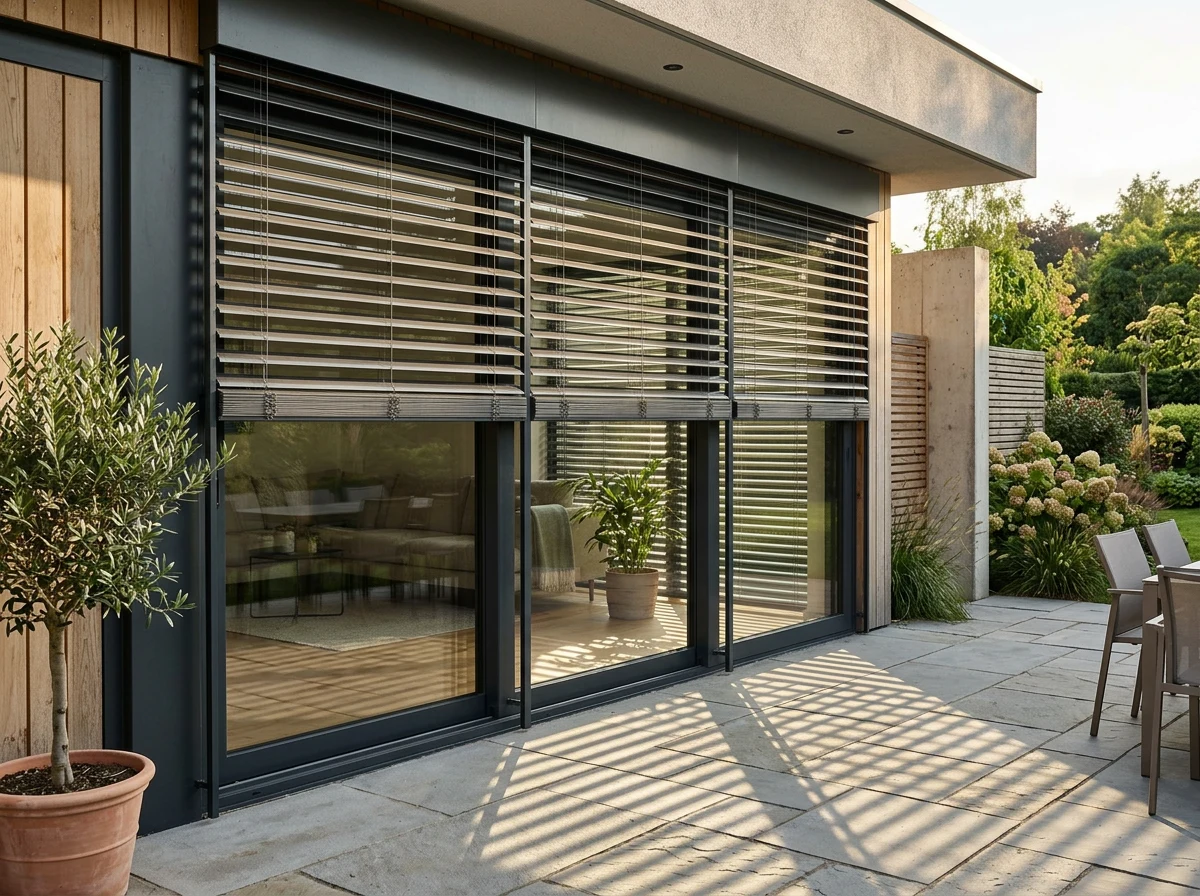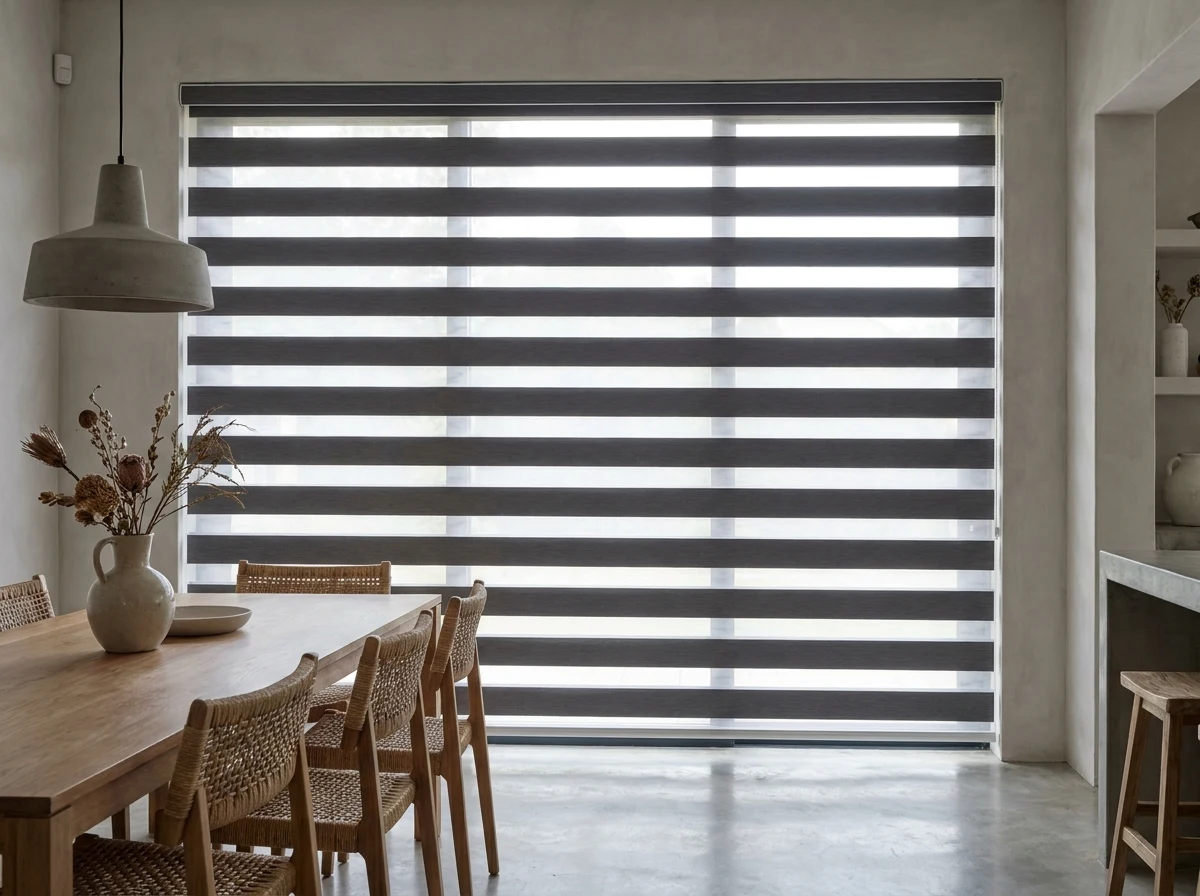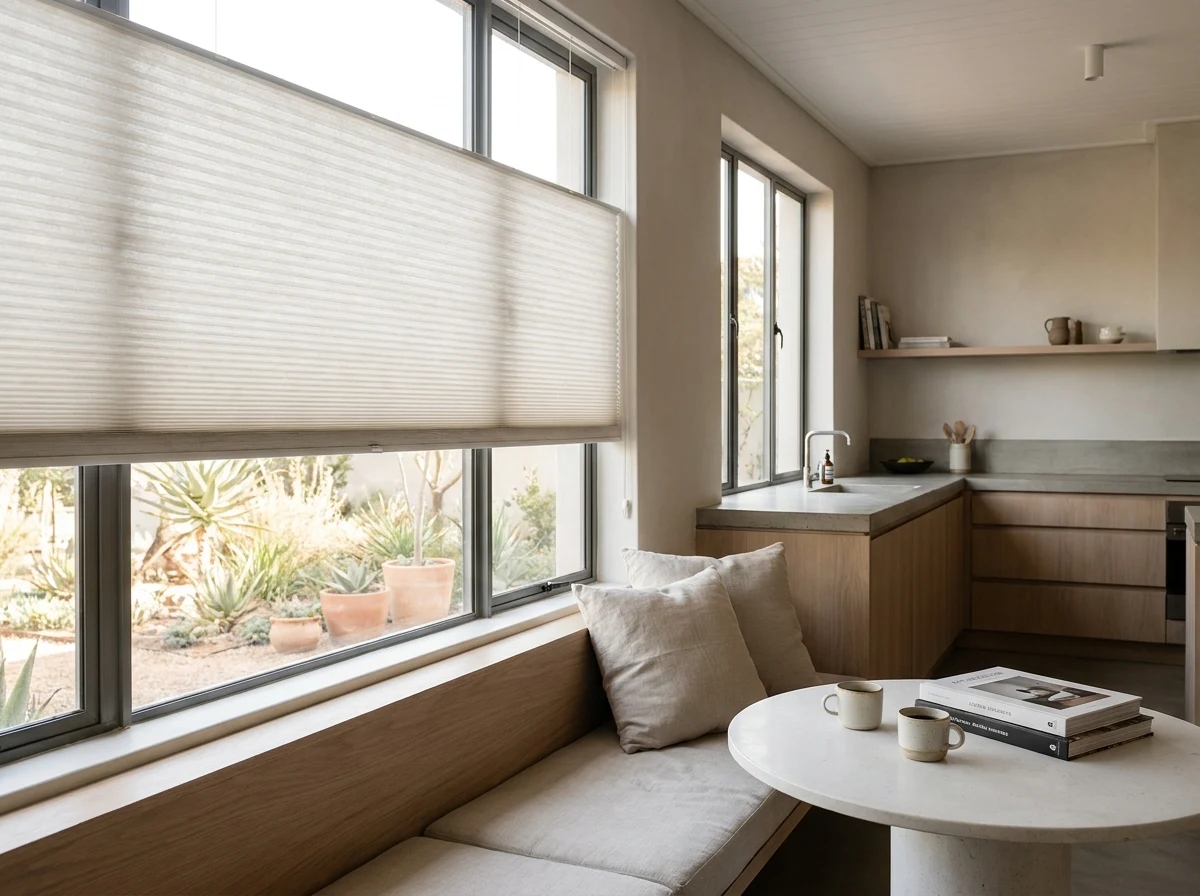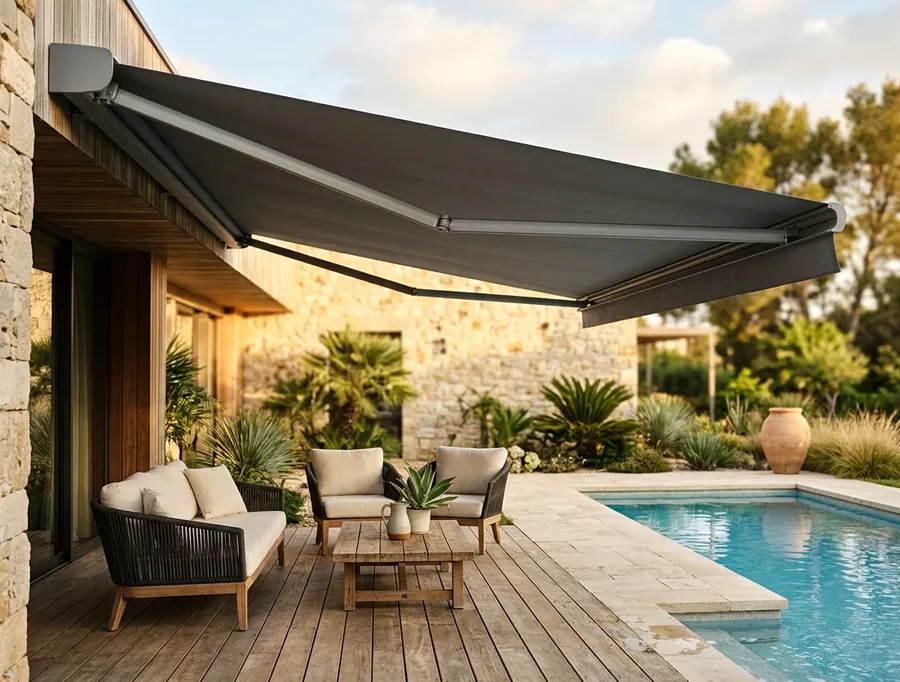
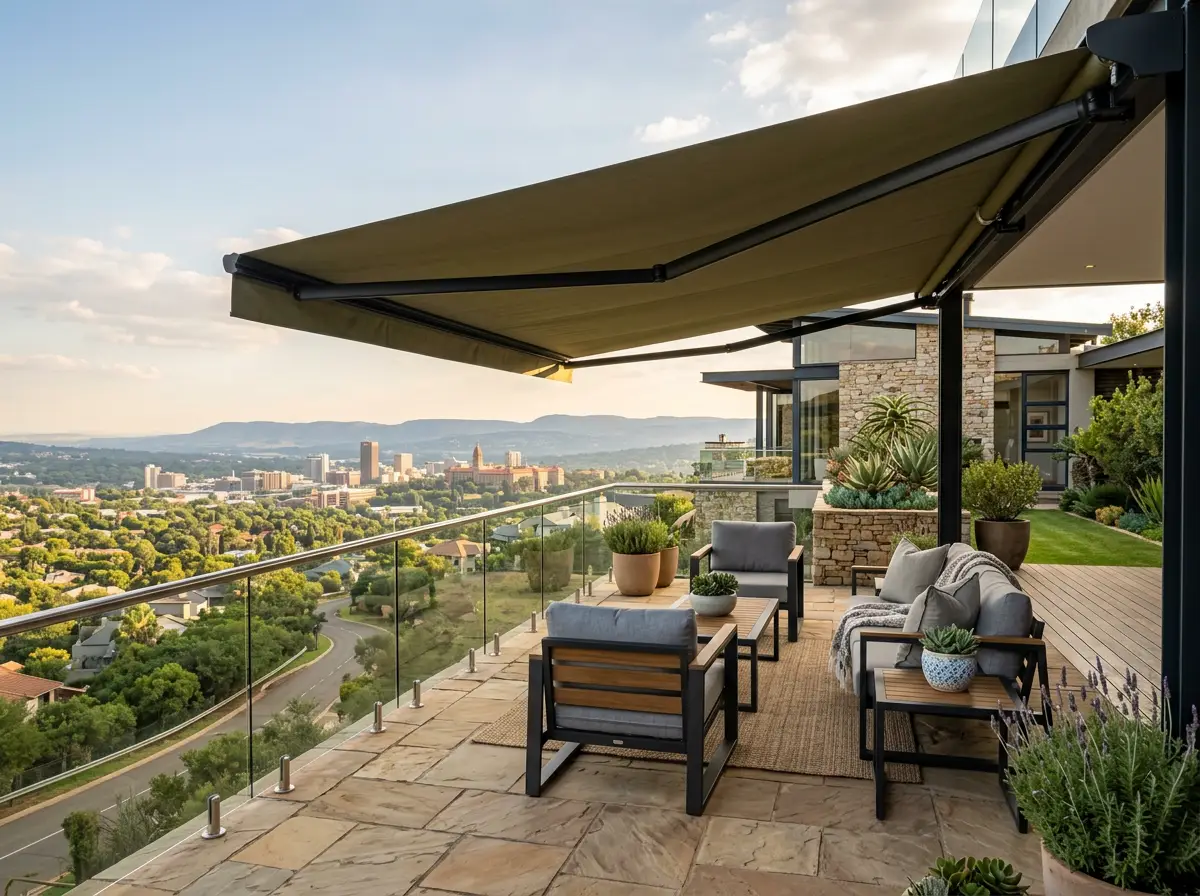
A north- or west-facing deck on the ridge is the best seat in the house for most of the day, and unusable for a few hours in the middle of it. A folding-arm awning turns that into a non-issue — it extends to shade the deck when the sun is at its worst, and retracts fully when it isn't, so the view stays uninterrupted for the rest of the day rather than sitting permanently under a fixed roof.
With no support posts, there's nothing standing in the sightline out to the koppies and nothing crowding a braai or entertaining area. Projection runs to roughly 3–4m over wide spans, and solution-dyed acrylic fabrics are chosen to hold their colour under sustained highveld UV.
Shade on demand, not shade permanently — the honest difference between an awning and a roof.
Motorisation with a wind sensor is the responsible spec on an exposed ridge position — an awning caught open in a highveld thunderstorm gust can be destroyed in seconds, and auto-retract removes the risk of anyone forgetting. It's worth being clear on the limits too: this is a shade product, not a rain product. Light drizzle at a pitch is fine; standing water and storm rain are not what it's built for.
Practical notes
- Full cassette for weather-exposed positions on the ridge; semi-cassette or open mounting elsewhere.
- Motor plus wind sensor is standard practice — the mechanism protects itself before a storm arrives.
- Fixing substrate (brick, timber or steel) is confirmed at the free site assessment, not guessed from photos.
- Shade product, not rain product — a pitch handles light drizzle, never a highveld downpour.