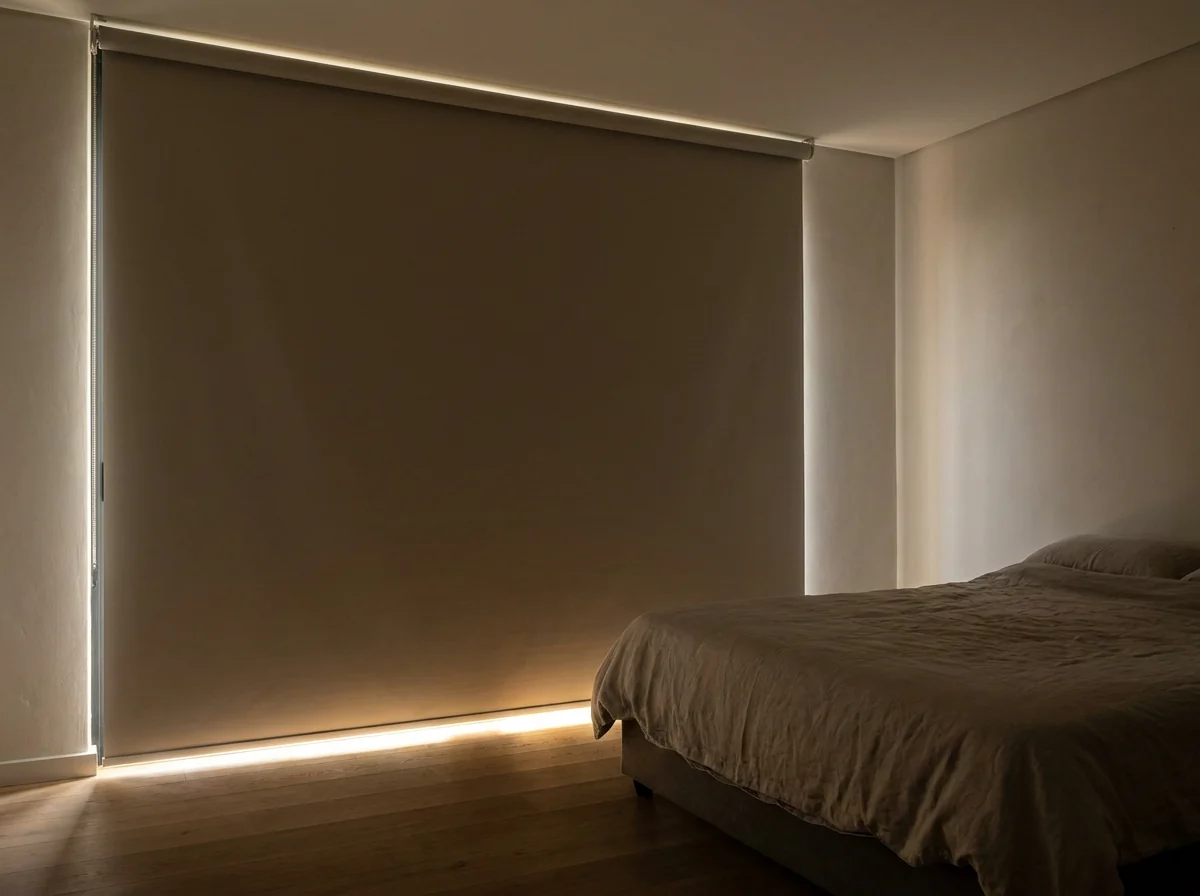
Roller blinds — sunscreen, blockout or day-night
Best on: view glass (sunscreen) · bedrooms (blockout) · rooms that change all day (day-night)
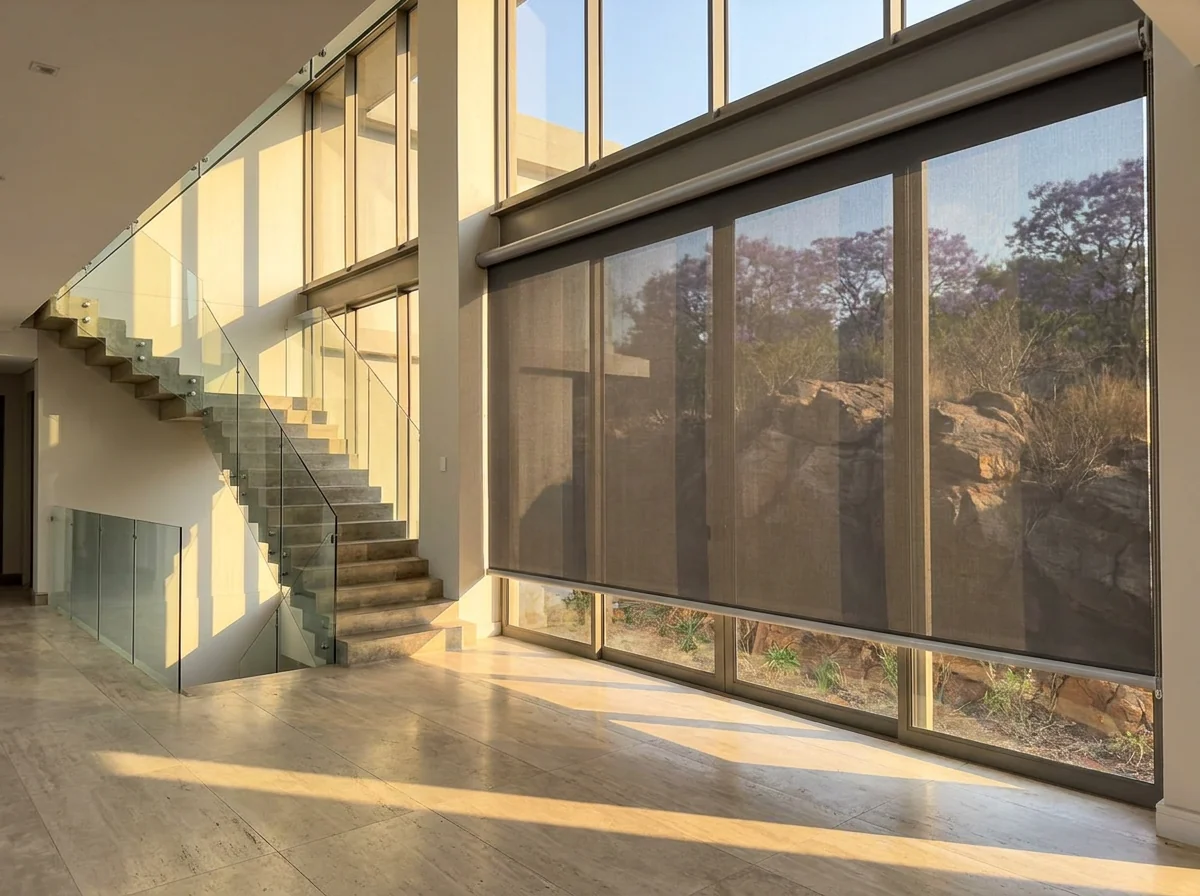
Why here. One smooth sheet of fabric on a slim tube — no folds, no fuss — is the workhorse for the sheer volume of glass a ridge home carries. A 3–5% openness sunscreen keeps the koppies visible from the couch while cutting glare and much of the fading UV; blockout does the opposite job for a bedroom or media room and adds a real thermal buffer on the morning-sun side. Day-night banding shifts one blind from open view to filtered light to privacy without ever being raised.
The catch. Sunscreen reverses after dark — lights on inside and the mesh you saw through all day now shows more in than out, so it's not a night-privacy fabric. Blockout is only as dark as its edges: inside a not-quite-square reveal a light line runs down each side. A double roller carries both fabrics on one bracket rather than making you choose, and a single blind runs to roughly 3 m before it's split or motorised and linked.